
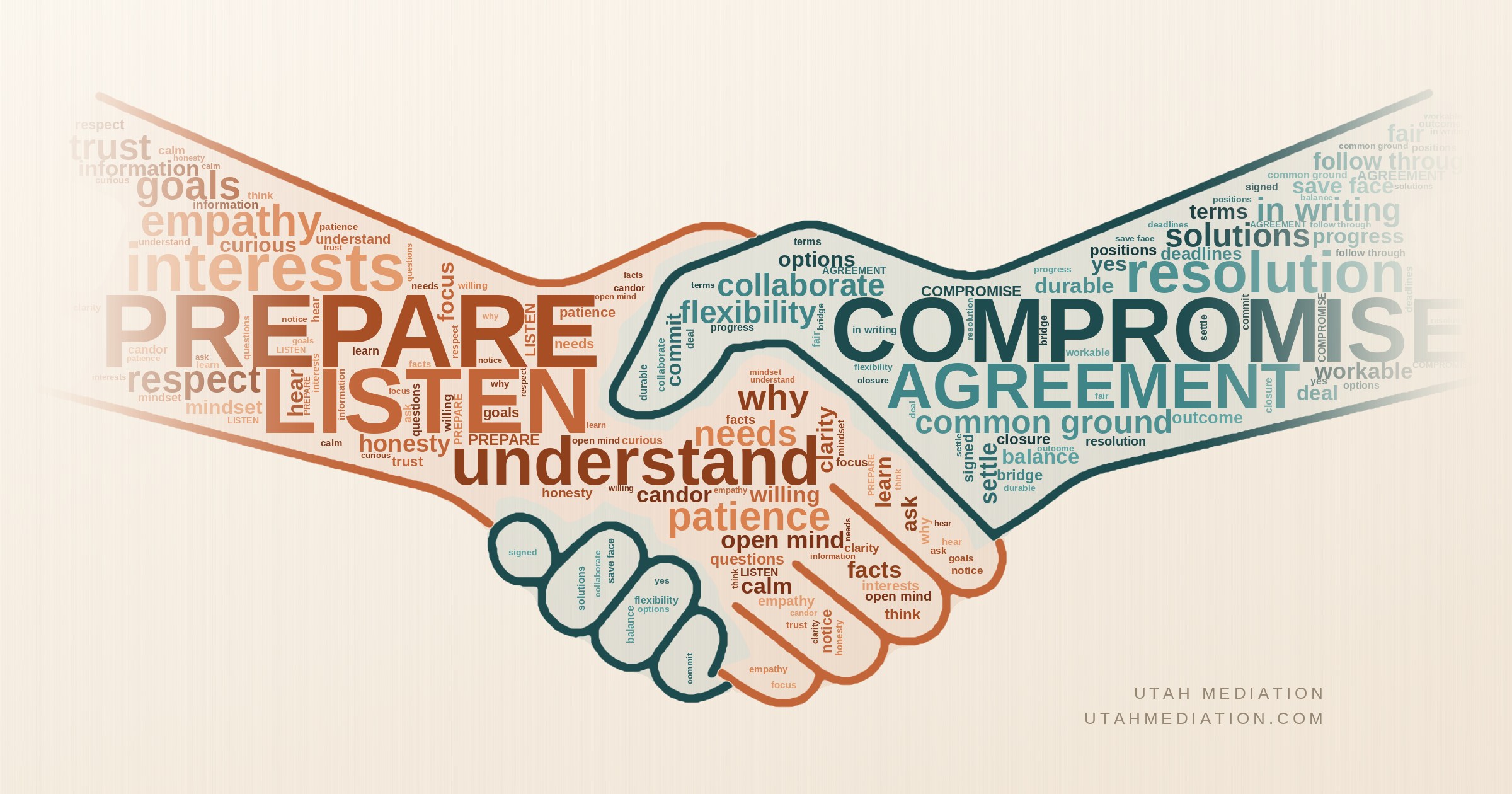
Mediation works. But it works best when the people in the room — or on the Zoom call — show up ready to make it work. A skilled mediator can guide the process, but the outcome still depends heavily on what each party brings to the table.
If you have a mediation coming up, here are the things that consistently separate a successful session from one that stalls out.
1. Come With a Goal, Not Just a Grievance
It’s natural to walk into mediation focused on what the other side did wrong. But mediation isn’t a courtroom, and dwelling on blame rarely moves things forward. Before your session, take time to think through what you actually want to walk away with. Is it a specific dollar amount? A change in behavior? A workable schedule? Clarity on that goal — for yourself, even before you share it with anyone — makes it much easier to recognize a good offer when one appears.
2. Separate Your Interests From Your Position
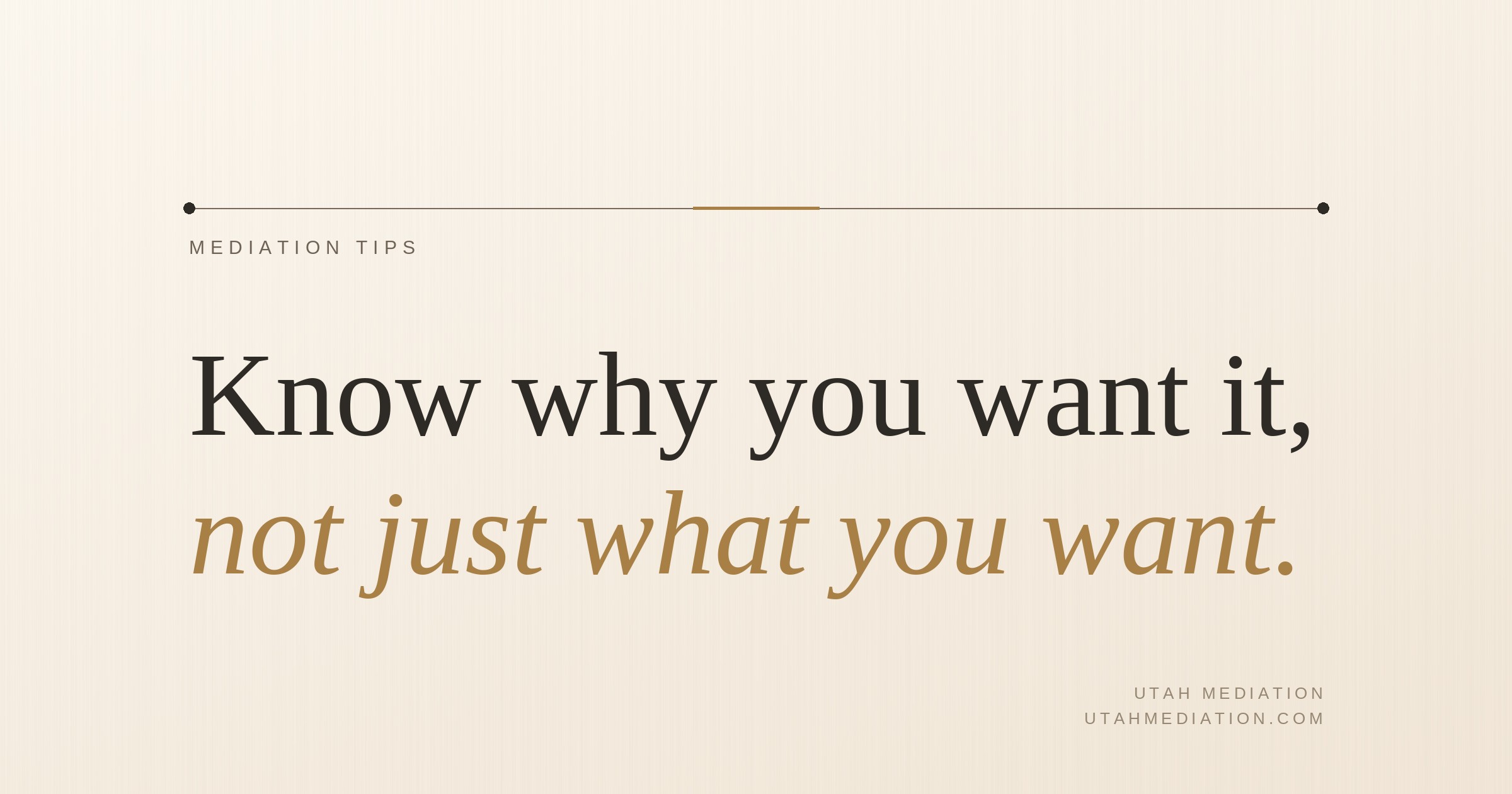
Your “position” is what you’re demanding. Your “interest” is why you’re demanding it. Two people can hold opposite positions while sharing overlapping interests — and mediation works by finding that overlap. If you can walk in knowing not just what you want but why you want it, you give your mediator far more to work with, and you open the door to solutions you might not have considered on your own.
3. Be Willing to Actually Listen
This sounds obvious, but it’s the single most common thing that derails a mediation. Many people spend the other side’s talking time mentally preparing their rebuttal instead of listening. Try to genuinely absorb what the other party is saying — not because you have to agree with it, but because understanding their perspective is often the fastest route to a resolution that works for both of you.
4. Expect to Compromise — and Decide in Advance What You Can Live With
Mediation rarely ends with one side getting everything it wanted. Going in with a rigid, all-or-nothing mindset is one of the fastest ways to end a session at impasse. Before you arrive, think honestly about where your true limits are versus where you’re just anchoring for negotiation purposes. Knowing the difference in advance keeps you from getting stuck in the moment.
5. Keep Emotion in Check — But Don’t Suppress It Entirely
Disputes are personal, and it’s unrealistic to expect anyone to feel nothing. But emotional outbursts — yelling, personal attacks, ultimatums — tend to harden the other side’s position rather than soften it. At the same time, a mediator often needs to understand how a dispute has actually affected you in order to help craft a resolution that addresses it. The goal isn’t to be a robot; it’s to express what matters without letting the emotion take over the room.
6. Trust the Process, Including the Separate Conversations
If your mediator uses shuttle diplomacy — moving between separate rooms rather than keeping everyone together — trust that this is working in your favor, not against it. It can feel strange not to hear everything the other side says directly. But this structure exists specifically to get both sides to a resolution that a face-to-face conversation might not reach. Give your mediator the candor in private caucus that you might not be ready to share in a joint session.
7. Come Prepared With Information, Not Just Opinions
Vague assertions are hard to negotiate around. If your dispute involves money, bring the numbers. If it involves a contract, bring the contract. If it involves a timeline of events, have it organized. The more concrete information you bring, the less time gets spent arguing about facts and the more time is available to actually negotiate a resolution.
8. Give the Other Side Room to Save Face
Especially in disputes between people who will continue to have a relationship — business partners, neighbors, family members — a resolution that humiliates the other side rarely holds up well over time. Look for ways to let the other party agree to terms without feeling like they’ve been defeated. This isn’t about letting them off easy; it’s about making an agreement more durable.
9. Be Prepared to Reduce Your Agreement to Writing
A resolution reached at the table isn’t final until it’s in writing, and parties are sometimes caught off guard by how much work that last step can take. It’s worth thinking about the settlement agreement before you ever sit down to mediate — not the specific terms, which still need to be negotiated, but the shape of the document itself.
If both sides are represented by counsel, the attorneys can often agree in advance on the boilerplate: governing law, confidentiality, how disputes over the agreement itself will be handled, and other standard provisions that have nothing to do with the substance of the dispute. That way, the only real work left at the end of mediation is filling in the terms that were actually negotiated.
Even when one or both parties aren’t represented, circulating a proposed form of agreement ahead of time can still help. Nobody wants to review and sign a dense legal document for the first time in the same sitting where they’re also feeling pressure to close out a long negotiation. Giving people a chance to get familiar with the structure of the agreement beforehand means they’re not learning the document and negotiating the dispute at the same time — and it lets everyone’s attention stay focused on the actual points of disagreement, where it belongs.
Beyond the writing itself, treat every deadline in the final agreement seriously — a payment, a signature, a delivery, a change in conduct. Nothing undermines the goodwill built during a successful mediation faster than one side dragging its feet on terms it just agreed to.
The Bottom Line
Mediation gives disputing parties something litigation can’t: control over the outcome. But that control comes with responsibility. The parties who get the most out of mediation are the ones who show up prepared, willing to listen, and genuinely open to a resolution — not just a win.
Ready to Resolve Your Dispute?
If you have a conflict that could benefit from mediation, we’re here to help. Reach out to us today to talk about how we can help you and the other party reach a resolution that works for everyone involved.